A 4 inch layer of topsoil over 1,000 sq ft takes about 12½ cubic yards, the figure University of Tennessee Extension gives for preparing a new lawn. The math is square feet × depth in inches ÷ 12 ÷ 27, which for 1,000 sq ft at 4 in is 12.35 cubic yards before any extra. Because loose soil settles once it is raked, rolled and watered, order a bit more than the bare number.
This calculator needs JavaScript. The formula and a worked example are explained in the article below.
Quick chart: topsoil for common areas
No extra for settling is included here (the calculator adds 10% by default). Bags assume a 0.75 cu ft bag; check the size on the bag you are pricing.
| Area | 2 in deep | 4 in deep | 6 in deep |
|---|---|---|---|
| 100 sq ft | 0.62 yd³ (23 bags) | 1.23 yd³ (45 bags) | 1.85 yd³ (67 bags) |
| 250 sq ft | 1.54 yd³ (56 bags) | 3.09 yd³ (112 bags) | 4.63 yd³ (167 bags) |
| 500 sq ft | 3.09 yd³ (112 bags) | 6.17 yd³ (223 bags) | 9.26 yd³ (334 bags) |
| 1,000 sq ft | 6.17 yd³ | 12.35 yd³ | 18.52 yd³ |
| 2,000 sq ft | 12.35 yd³ | 24.69 yd³ | 37.04 yd³ |
| 5,000 sq ft | 30.86 yd³ | 61.73 yd³ | 92.59 yd³ |
Bag counts stop at 500 sq ft for a reason: a 1,000 sq ft lawn at 4 in would take 445 bags of 0.75 cu ft. Past a few yards, bulk delivery is the practical route.
How to measure the area
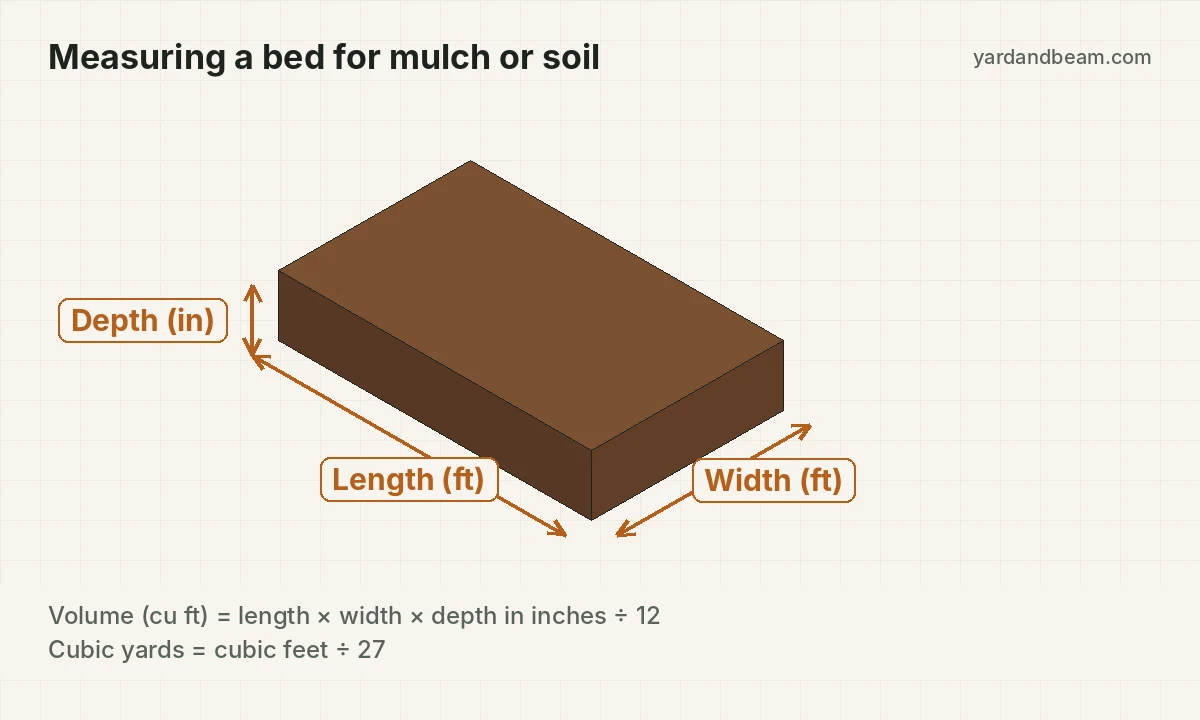
Measure the ground you will cover in feet. Lawns are rarely perfect rectangles, so split the yard into rectangles, triangles and circles, work out each one, then add them up. Our guide on how to measure square footage walks through each shape.
Leave out the house, driveway, patio and any beds you won’t be filling. Measure depth as the finished depth you want, and check it in several spots if you are filling a low area, since dips need more soil than the average suggests.
The formula
cubic yards = area (sq ft) × depth (in) ÷ 12 ÷ 27
A new lawn area is 30 × 40 ft, and you want 4 in of topsoil.
30 × 40 = 1,200 sq ft.
1,200 × (4 ÷ 12) = 400 cubic feet.
400 ÷ 27 = 14.81 cubic yards.
Plus 10% for settling: 440 cubic feet = 16.3 cubic yards.
In 1 cu ft bags that would be 440 bags, which is why lawn jobs are usually ordered in bulk.
How deep should topsoil be?
New lawns. University of Tennessee Extension’s turf establishment guide uses a 4 in layer of topsoil, about 12½ cubic yards per 1,000 sq ft. The same guide notes that turf grown in fertile loam is often healthier and more tolerant of stress than turf in poorly drained clay subsoil, which is the main reason to bring topsoil in after construction or grading strips it away.
Heavy clay underneath. UT Extension says aeration and drainage usually improve when 4 or more inches of loamy topsoil or coarse sand are mixed with 1½ to 2 inches of the clayey soil, rather than simply laid on top. It also mentions adding compost or mature sawdust at about 10 to 15% by volume.
Garden beds. University of Maryland Extension, writing about beds built over existing lawn, suggests a mix of compost and purchased topsoil at 1:2 or 1:1. For an in-ground bed where the soil is already decent, it recommends adding compost instead: 4–6 in mixed into the top 4 in. For beds with sides, use the raised bed soil calculator, which works out the volume from the board height.
| Job | Depth | Per 1,000 sq ft (no extra) |
|---|---|---|
| New lawn (UT Extension) | 4 in | 12.35 yd³ (UT rounds to about 12½) |
| Filling low spots | Measured depth of the dip | Calculate each dip separately |
| Bed over lawn (UMD: 1:2 or 1:1 compost to topsoil) | Your bed depth | Use the raised bed calculator |
Settling: why you should order extra
Freshly delivered topsoil is loose. Once it is raked, rolled and watered, it packs down and the finished layer ends up thinner than what you spread. How much depends on the soil and how wet it was when delivered, so ask the supplier. The calculator adds 10% by default as a margin; raise it if you are filling deep holes or plan to roll the surface firmly.
A few other things that change the order:
- Grade and slope. Filling a dip by the patio takes far more soil per square foot than leveling a flat yard. Calculate the deep sections on their own.
- Keep soil off the house. Don’t build the grade up against siding or above the top of the foundation; the ground should slope away from the house so water drains off.
- Test before you buy more. UT Extension recommends sending a soil sample to a lab about six weeks before planting. A test tells you whether the soil needs lime or fertilizer, which no amount of extra topsoil will fix.
Once the soil is down, you can seed or lay sod. Work out the next step with the grass seed calculator or the sod calculator.
Frequently asked questions
How many square feet does a yard of topsoil cover?
At 4 in deep, one cubic yard covers 81 sq ft. At 2 in it covers 162 sq ft, and at 6 in it covers 54 sq ft. The general rule is 324 ÷ depth in inches.
How many bags of topsoil make a cubic yard?
Divide 27 by the bag size on the label. That is 36 bags of 0.75 cu ft, or 27 bags of 1 cu ft.
Should I put topsoil over existing grass?
A thick layer smothers the lawn underneath. If you are starting a new lawn, remove or kill the old turf first. For beds built on lawn, University of Maryland Extension suggests smothering turf with cardboard, newspaper or fabric for about 6–8 weeks before filling.
How much extra topsoil should I order?
The calculator adds 10% by default to allow for settling and uneven ground. For deep fills or heavy rolling, increase it, and confirm with your supplier how much its soil tends to settle.